
In short, TRX energy rental allows users to conduct transactions or execute smart contracts without holding a large amount of TRX, lowering the threshold and cost of transactions.
Let's start with the simple part
Currently, a single USDT-TRC20 transfer costs several tens of yuan, ranging from 20 to 30 yuan
Generally, if the recipient's wallet has U, it costs around 24 yuan; if the recipient's wallet does not have U, the cost may double.
With such high fees, why do many people still use USDT-TRC20 for transfers?
This is where TRX energy rental comes in. Search in Telegram groups, and you'll find many people in this business.
Generally, the market rate for a transfer is 65,000 energy; if the recipient does not have U, it is 134,000 energy
Converted to TRX, it's either 2 TRX or 4 TRX, depending on the person
The way to get a bargain is to search for 1 TRX offers; there are many, as many people use this to attract followers rather than to make money
Those who rely on this for profit will definitely charge much higher prices.
In short, you need to understand that a USDT-TRC20 transfer requires TRX. If you don't have TRX, you need energy, and energy can be provided by others. As for how it is provided, I don't know, but they have an automatic energy transfer system.
Simply put, you give someone 1-4 TRX, and they transfer you enough Tron energy for one transaction.
This is definitely much cheaper than using your own TRX as a fee; it can be said to be zero fee.
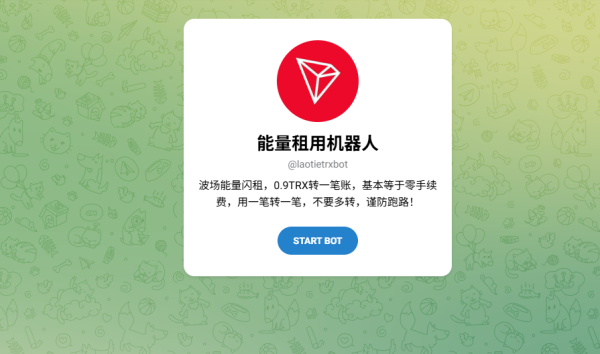
For example: @laotietrxbot this energy rental bot
Below is the principle of energy rental
Tron (TRX) energy rental involves staking TRX assets into the network to obtain "energy," allowing users to pay transaction fees and execute smart contracts. This mechanism enables users to operate efficiently without holding excessive TRX. Below are its uses, principles, and operational process:
Uses:
- Reduce transaction fees: TRX energy can be used to pay network transaction fees, especially when users do not have sufficient TRX balance.
- Smart contract execution: By renting energy, users can execute smart contracts on the TRON network without paying excessive TRX.
- DApp (Decentralized Application) usage: DApp developers or users use TRX energy for transactions and interactions, reducing the cost of using DApps.
Principle:
The TRON network's resources are divided into three parts: Bandwidth, Energy, and TRX. Among them:
- Bandwidth is mainly used to pay for data transmission costs in the network.
- Energy is used to pay for computational costs when executing smart contracts or transactions.
- TRX is the base asset of the TRON ecosystem, used for staking and obtaining resources.
In the TRON network, users obtain energy by staking TRX. The more you stake, the more energy you get. TRX energy usage is relatively independent, reducing users' reliance on TRX liquidity. Energy automatically recovers every 24 hours and can also be obtained by renting other users' TRX.
Simple Operational Process:
- Purchase or own TRX: First, you need to have TRX tokens, which can be purchased from an exchange or obtained from other sources.
- Stake TRX to obtain energy: Open a TRON wallet or trading platform (e.g., TronLink, Binance, etc.). Select the "Stake" option in the wallet. Choose to stake TRX to obtain energy (you can also choose to rent).
- Rent energy: You can directly choose to rent energy through the wallet platform. When selecting rental, the platform will provide a series of rental options, usually calculating the energy price based on the rental duration and amount.
- Use energy: After renting or staking, you can use the obtained energy to conduct transactions or execute smart contracts, avoiding the payment of transaction fees.




 1
1